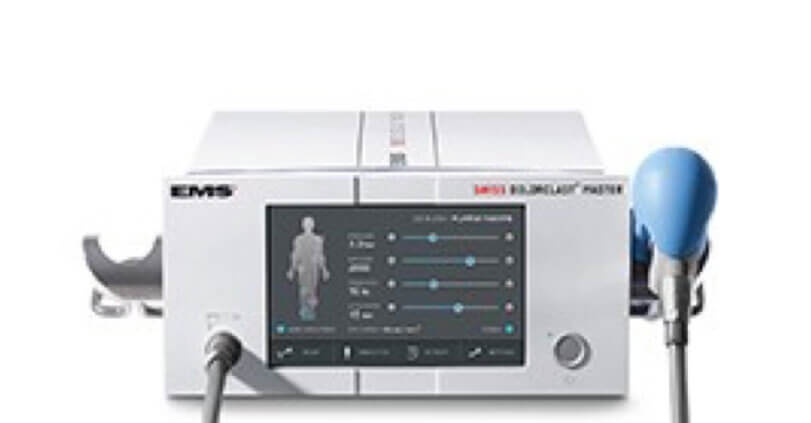
Shockwave Therapy
Extracorporeal Shockwave Therapy (ESWT)
ESWT is a highly effective, non-surgical treatment which has good evidence regarding the treatment of tendon-related pain:
- Plantar Fasciitis (Foot and Heel pain)
- Achilles Tendinopathy
- Lateral Epicondylitis (Tennis Elbow)
- Calcific Tendinopathy (Shoulder)
- There is less evidence regarding the treatment of muscle aches and pains, osteoarthritis and other sports injuries, but some people do experience good relief with these conditions, and more research is being applied to these areas.
How does ESWT work?
ESWT is a procedure whereby mechanical shockwaves (sonic impulses) are delivered through the skin to the injured tendon in a pulsating manner. This has an effect on the tissue to:
- Reduce pain by slowly reducing neurogenic inflammation.
- Break down adhesions and scar tissue, thus improving tendon glide and function.
- Improve blood flow which stimulates neovascularization (blood vessel formation) in the injured tissue, thus improving cell regeneration and accelerating healing rates.
It is a very successful treatment for patients who have not responded well to conservative care (Physiotherapy / Chiropractic / Osteopathy/ Medication / Exercises), and is an alternative to Injection Therapy (steroid / hyaluronic Acid) or Surgery.
NICE, the National Institute for Health and Care Excellence has produced recommendations for patients on ESWT for the above conditions which can be accessed on their website:
What can I expect?
ESWT is carried out by Alex Dimopoulos DC, lead Chiropractor at the Romsey Chiropractic Clinic with over 20 years of clinical experience, who has undertaken specialised training with the Swiss Dolorclast Academy to carry out the procedure. Whilst holding the necessary statutory General Chiropractic Council registration, he is accredited to use ESWT in practice and is also a member of the British Shockwave Association (BSWA).
You will be asked to undergo an initial consultation and examination to determine whether or not Shockwave Therapy will be clinically relevant to you, and to exclude contra-indications. You will also have a chance to have all your questions answered and any concerns addressed. Should treatment be indicated, it will be applied at the first session, with the area of pain being identified and marked, and a gel applied to the skin to facilitate the process.

1. Identifying the painful area
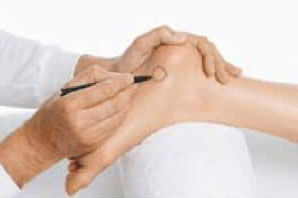
2. Marking the treatment area
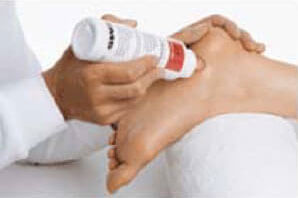
3. Applying the contact gel

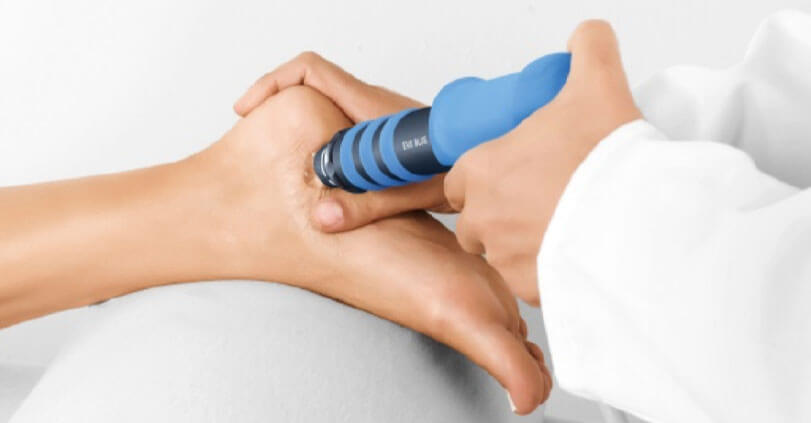
4. Delivering the shockwaves
A shockwave device (hand piece with a probe) is then placed on the skin, using the gel as a medium to deliver the shockwaves into the tissue effectively, and these will start with a low level of intensity and increase gradually. Each shockwave application lasts roughly five to ten minutes.
The procedure can cause discomfort but is not severely painful and your pain levels will be constantly monitored during treatment.
After treatment
You are able to get up and move about as normal. The treated area may be slightly red and some discomfort may last for 24 hours although this is not common. If you do experience discomfort you may take over the counter painkillers, but we ask you to avoid anti-inflammatory medication (ibuprofen / naproxen) or ice-application, as this may interfere with the recovery process in the short term.
You will be given specific home exercise instruction and in certain cases where clinically relevant various other modalities (kinesiotaping, massage, medical acupuncture, joint mobilization) may be applied to surrounding tissues to speed up recovery.
We recommend avoiding any high impact exercise or strenuous pain-provoking activity for 48 hours to allow the tissue to settle.
How many treatments will I need?
The latest research indicates that most conditions respond very well to a short course of 3-4 treatments, 1-2 weeks apart, although more resistant cases may require up 5-6. A large proportion of people experience notable relief within the first 3-4 weeks, but research shows that it may take several weeks after the course of treatment to see an overall benefit. It is suggested that you have a follow-up review at roughly 6 weeks after treatment to assess your response, provide a top-up session if necessary, and to discuss further exercises and self-management.
Contra-indications to Shockwave therapy
Certain situations and ailments that mean you are unfortunately unable to undertake Shockwave Therapy include:
- Pregnancy
- Antiplatelet drugs such as Clopidogrel or anti-coagulants such as Warfarin
- Blood clotting disorders such as Haemophilia
- Bone cancer
- Infections
- Implant devices over / near the site to be treated
- Under age 18 years (with open growth plates)
- Steroid inject to the affected area in the last 12 weeks
- History of tendon / ligament rupture to the affected area
- Post-surgical wounds
If you are concerned or unsure about a condition you may have that is not on this list, please do bring it up at your initial appointment.
Treatment Fees
We aim to keep Shockwave Therapy affordable and available to all, and a simple online search comparison for both Hampshire and the UK as a whole will demonstrate that our fees strongly reflect this.